Friday, July 11, 2014

2. The Bourne Supremacy (2004)

Victoria,

You touch on some worthwhile points in your review that I want to be sure to address in mine.  Before I get to that, though, I want to let you know that much of what I’m going to talk about is going to center on the difference between what I think Greengrass is trying to do, and what the movie actually is.  This might seem a bit unfair at first blush, but I don’t think so, because this movie fails the first test every single sequel in the history of filmdom has to pass: this film fails to justify its existence over and against its first episode (granted, most of Hollywood doesn’t play by this rule, but it should - it’s the one thing good sequels, like The Godfather Part II or The Empire Strikes Back or, heck, even Spiderman 2, have in common).  There isn’t really a good reason for The Bourne Supremacy to exist, narratively speaking, and so I can’t really qualify it as a “good” film per se, or talk substantively about the ideas that are actually present in the film.  I can talk about what I suspect Greengrass wanted to do, though, because if he had accomplished it, the film would’ve had enough muster to legitimate itself.


What I suspect Greengrass wanted to do in The Bourne Supremacy was to treat seriously the idea that violence, something that is commonplace and typically taken for granted in film (especially American film), has consequence in the lives of individuals.  I base this argument partially on the rest of Greengrass’ oeuvre, which has, in one way or another, dealt more transparently with this idea.  I think particularly about the scene at the conclusion of Captain Phillips, in which Tom Hanks’ character suffers physical shock from the violence and terror that has occurred around him over the course of the film.  This scene is powerful because it shows something film typically doesn’t - a character dealing with the aftermath of what is, in the grand scheme of film history, relatively minor violence.


There is a somewhat similar scene in the conclusion of Bourne 2.  Here, Damon’s Bourne apologizes for the assassination of a Russian politician and his wife to their orphaned daughter.  We watch her grieve over the deaths of characters that are, in light of the entire narrative of the Bourne films, more-or-less insignificant.  We, the viewers, are supposed to think seriously about the cost of death and carnage, and perhaps even the effect of our fetishization of it in film.


The problem is we don’t.  Instead, we think back to the obnoxiously long car chase we just endured, or the fist-fight in the chic European apartment, or the snipering of Marie, a character we do in fact care about but find it hard to believe Bourne does.  This is what happens when you situate an emotionally-potent scene in an otherwise standard-operation action film, which is ultimately what Bourne 2 is.  Greengrass thinks, I think, that the “shaky cam” changes this, and I see why he would think so.  The camera movements, particularly in the action scenes, are designed to make the viewer feel as if they are physically a part of what is happening on-screen.  The cinematography is definitely effective, but it doesn’t quite take the viewer where Greengrass intends.  The result is a movie that, as you point out, is nice to look at, but doesn’t, in execution, have anything new or interesting to say, especially when compared to its originating counterpart.

Hopefully “Bourne 3: Bourne Again, Again” succeeds where this one doesn’t.

Love,
Adam


1. The Bourne Supremacy (2004)

Adam,

Given its reputation as one of the better sequels out there, and given its director Paul Greengrass’s pedigree, I'm surprised to say I liked The Bourne Supremacy rather less than its predecessor.  


The Bourne Supremacy feels like it spent a lot of time on the explication of its plot and on the choreography of action sequences (some of which are, admittedly, nifty) without bothering to build on any of the ideas from the previous film.  This isn’t to say that The Bourne Identity was perfect—Bourne’s moral about-face was awfully convenient, as you noted in your review—but it had an absurdist take on the typical spy premise and a political acuity that set it apart from other Hollywood run-shoot-fight exercises.


The weaknesses in Identity should have given Supremacy room to expand and flesh itself out.  Mostly, though, Jason Bourne runs around, reacts—albeit stoically—to assorted bits of bad news, and blows up a house for good measure.  In between is the fallout from the assassination of a Russian reformer which could have had contemporary relevance if the movie had any more sophisticated an attitude about it than IT WAS BAD.  The first movie understood that international powers interact with each other in complicated ways, guided variously by national self-interest, moral necessity, and just plain bureaucratic incompetence.  For example, it implicitly asked, is it ever justified to eliminate a foreign dictator—for political or moral reasons?  This movie, while it gets the bureaucratic inefficiency right, seems to think that political snafus can be probably traced to the mercenary impulses of a few crooked officials.

Also disappointing is the treatment of Bourne’s girlfriend Marie, a holdover from the last movie who is quickly dispatched in Supremacy’s first act.  Sure, Bourne sheds a few obligatory tears for her, but it’s pretty clear that the movie is primarily interested in 1) drumming up some easy sympathy for Bourne, and 2) streamlining the narrative so that Bourne can conquer bad guys without having to drag along any Franka Potente-sized baggage.


All that said, there’s a lot to appreciate in this movie, especially the acting, which is something I don’t always feel generous enough toward actors to comment on.  Special kudos go to Matt Damon and Brian Cox for bringing commitment, professionalism, and verisimilitude to roles which otherwise could have been expensive filler.  Damon embodies a basic decency that is essential to grounding the film in some emotional reality, even when he’s bouncing around Eastern European streets riddled with bullets.  Cox, meanwhile, shades his performance with a weary pathos that makes his character seem like more than just a stock villain.  With his fraying hair and eyebrows that look permanently furrowed, he’s the corrupt cop and the thirty-year lifer with one more to go before retirement, all rolled up into one.  Joan Allen, whom I usually enjoy, fares less well, relegated as she is to barking generic boss lady orders like, “If you want to go home, FIND JASON BOURNE!”


Also, there are those previously mentioned nifty action sequences that are in fact pretty nifty, serving to more or less justify, as they say, the price of admission.  My favorite is a loopy little getaway involving a boat, a crowbar, a bridge, and a train.  There’s also a hand-to-hand fight sequence that fulfills this movie’s quota for the fetishized destruction of stylishly chilly European interior design.  The climactic car chase, however, runs far too long and monotonously.


All told, I’m still looking forward to The Bourne Ultimatum, which will hopefully not wear out my tolerance for shaky-cam.


Love,
Victoria

Wednesday, July 9, 2014

2. The Bourne Identity (2002)

Adam,

After a little hiatus (road trip, wedding planning, Star Trek), I’m back—as inevitable as a big budget remake of a familiar property.  Speaking of which, let’s jump right in.


You point out, in your comparison of the two super-spies, that both James Bond and Jason Bourne subvert certain cultural assumptions about Brits and Americans.  I think you’re right on about that.  But it’s also worth keeping in mind the ways both characters embody values and concerns specific to their respective cultural contexts.

Bond’s confidence does make him seem like a deviation from the norm of diffident British men, but he also makes perfect sense as a champion of Anglo-Saxon tradition and structure.  For example, look at all that goes unquestioned by the Bond franchise: the entitlements of masculinity, the moral and national imperative to preempt acts of terrorism abroad, the good intentions of a political organization like MI6.  Even Skyfall, which went about as far as any Bond film in challenging the basic premise of the series, still characterizes the MI6 organization and leadership as essentially supportive, reliable, and just (Javier Bardem's villain may have felt wronged by MI6, but he was also totally crazy-pants and arguably deserving of his fate).  This faith in—or at least acceptance of—structures is perhaps to be expected from a nation still in possession of a monarchy.

It’s also possible to look at James Bond the character as a symbol for Britain itself.  Bond always pretty much knows who he is, even though he has been dozens of times by a half dozen different actors.  There is an underlying consistency that is ultimately comforting, even when it involves a bevy of institutionalized horrors like alcoholism and casual misogyny.  (Because a good Brit knows what serving the Empire calls for: a stiff upper lip, a stiff drink, and a stiff—well….)


I don’t mean to get sidetracked talking about James Bond, but 1) you started it, 2) I do want to establish critical perimeters within which to begin talking about our current film.  What does it say that in 2002, America produced, of all things, an existential spy thriller?  Unlike calm, cool, collected James Bond, Jason Bourne doesn’t have a clue who he is, and most of what he discovers alarms him.  As you discussed in your review, Bourne’s gradual uncovering of his past can be read as a metaphor for personal psychological discovery.  But it can also be interpreted allegorically through the lens of recent American political history.  

It’s a coincidence that The Bourne Identity came out right after the September 11 attacks and just before the ensuing Iraq War.  The prescience of the film's warning not to meddle in the affairs of other countries owes everything to its awareness of history, to the fact that foreign entanglements have been a recurrent theme in American politics. When director Doug Liman set out to adapt the original novel, he wasn’t thinking of Saddam Hussein; he was inspired by the Iran-Contra affair, which his own father was involved with investigating.


The Bourne Identity’s disgust at the duplicity and callousness of organizations comes out of an American temperament that has bred, time and again, an individualistic dissatisfaction with institutions.  Bourne, in this sense, is the ultimate individualist—striking out on his own, frontiersman-style, guided only by his intuition, skills, and conscience.  Even more specifically, the movie’s vision of America is influenced by the scandals and mounting disillusionments that have marked late 20th century American politics, from Vietnam to Watergate to Monica Lewinsky.  The true villain of The Bourne Identity isn’t the dictator Bourne was originally assigned to kill; it’s the shady CIA program that ordered the hit.  Bourne’s America is one continuously in the process of figuring itself out, only to be horrified by what it learns about itself.


Funny, there’s enough to discuss about the ideas in the movie that I haven’t even really begun to talk about how I responded to actual scenes, which OMG REMEMBER WHEN MATT DAMON JUMPED DOWN THAT STAIRWELL AND TOTALLY SHOT THAT DUDE ON THE WAY DOWN OMG.


Next up: Bourne 2: Spy Conspiracy Boogaloo.

Love,
Victoria

Wednesday, June 25, 2014

1. The Bourne Identity (2002)

Victoria,

And now for something completely different.  We chose to follow up the sappy, emotionally scatter-brained P.S. I Love You with the dour, gray-scale The Bourne Identity.  I like this movie, but with caveats.


In some respects, the Bourne films play out as the anti-Bond; while Bond is playful, Bourne is intense; while Bond is confident and brash, Bourne is reluctant and measured.  I ultimately prefer Bourne’s style of spy action - his please-don’t-mess-with-me-now-I’m-going-to-kill-you thing makes the violence somehow feel more justified.  This dichotomy, between Bond and Bourne, is particularly fun because of the way it makes us think about national stereotypes.  Bond, the Brit (who should be tepid), is the brazen one, whereas Bourne, the American (who should be ballsy and crude), is cautious.

This is maybe worth thinking about because Bourne’s creator, Robert Ludlum, was an American, as are the film’s director (Doug Liman) and screenwriters (Tony Gilroy and William Blake Heron).  This film, and its sequels, feel very much to me like an American version of a European thriller.  Or, put another way, this is an action-packed, car-chase filled version of something like Le Cercle Rouge, The Day of the Jackal, or Tinker Tailor Soldier Spy.  It is perhaps unfair to blame this solely on the nationality of its creators, but my impression remains: this is an American action film putting on the act of having European cinematic sensibilities.  For an example, I would direct you to the scene in which Bourne, quietly assessing his options at a lonely French farmhouse, decides to evade his sniper by blowing up a gas generator.


I don’t mean to sound too negative about the style of the film, because ultimately it works for me.  I enjoy seeing a fireball just as much as the next guy.

Far more interesting in this film is its take on knowledge and ethics.  This movie seems to be straining for most of its runtime at allegorizing the Platonic doctrine of recollection.  According to Plato in his dialogue Meno, “We do not learn, and that what we call learning is only a process of recollection.”  In other words, people don’t actually learn anything new, they simply figure out things they already knew, probably, Plato thought, from a past life.  Plato understood this to work for virtue too - one couldn’t learn to be virtuous, you simply had to locate the virtue already locked into you.  Plato understood that some people would naturally have more than others.

Insert Bourne (or “born.”  Get what they did there?).  Bourne spends the entire movie learning things about himself that he ultimately already knows. In the conclusion of the film, he is told/remembers that he messed up on his final mission, and, rather than assassinate an African politician like he was supposed to, he chose to be merciful.  This occurs, we (and Bourne) find out, because his conscience awoke and thought it might be a bad idea to ruthlessly murder a father in front of his children.


Speaking in terms of strict allegory, this works.  Bourne not only learns that he has all sorts of super-spy abilities, he also learns that he has some sort of ethical awareness.  This is not something he accrues through education, this is something inherent to his person.  As a viewer, this introduces a tremendous problem, however.  Why on earth would Bourne’s conscience kick in right at that exact moment?  Prior to his amnesia, he was, presumably, a highly successful assassin.  Why did his sense of right and wrong kick in then, and not sometime earlier in his life?  Say, when he signed up to be a gun-for-hire in the first place?  Or when he made his first kill?  The film doesn’t offer any sort of explanation, and this feels a bit like cheating.  Of course, Plato didn’t offer much of one either, and so perhaps this is just in keeping with the formula.  It still bothers me though, more than anything else in the film.  Maybe the sequels will clear this up.

Love,
Adam

Saturday, June 21, 2014

2. P.S. I Love You (2007)

Victoria,

Mazel Tov indeed.  Like you, I also hated this movie.  Unlike you, I don’t feel like I’ve been robbed of any right to righteous anger.  On the contrary, it is exactly a film like P.S. I Love You that warrants a very particular form of aggravation.

You noted that P.S. I Love You is clearly the work of a human mind and couldn’t possibly have been assembled to further corporate interests.  I totally agree, and it is because of this that the movie becomes irritating.  Because someone (Richard LaGravenese) made choice after choice after choice, thinking, I presume, that he was saying something worth saying.  Something, I presume, about the way relationships work.  Or the way grief happens.  Or the way people move on after hardship.  Instead of accomplishing this in any way, shape or form, LaGravenese has produced a film about narcissists wearing hats.


The hats in the film are quite nice, by the way.  P.S. I Love You is credited by some in the fashion world with popularizing the Cloche hat.  To quote Morgan Cullen of Runway Daily, “What I do want to do here is point out here is [sic] Swank’s UBER cute head-wear throughout the entire movie.”

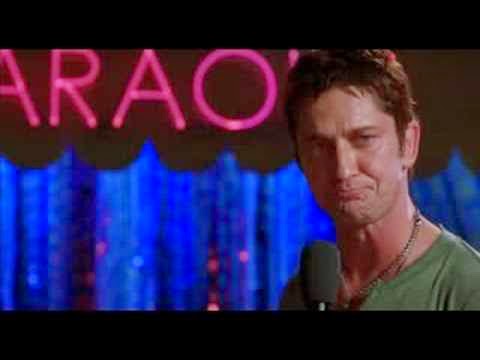
Hats aside, the infantile self-involvement of the characters, particularly Swank’s Holly, becomes difficult to watch after only a few minutes of screen time.  The film opens with Holly frustrated with husband Gerry (Gerard Butler) because he mentioned to her mother that she wasn’t ready to have children.  The problems with this scene are numerous.  To begin with, it is in no way endearing that she is furious with him for saying something that, it becomes clear, she in no way indicated she didn’t want him to say.  She’s just upset to be upset.  Gerry, rather that attempting genuine communication with his wife, eggs her on and antagonizes her, fueling her distemper.  It quickly becomes apparent that he, too, has the emotional capacities of an elementary-aged child.  The film implies that via this scene, the first and most important time we see Holly and Gerry alive together, we are supposed to somehow intuit the depth of their love for each other.

Instead I intuited that: A. Holly and Gerry need couple’s counseling, and B. Writer/Director LaGravenese doesn’t understand how feelings work.


The emotional tone-deafness of the film carries on from this point, and the viewer is treated to a slew of scenes that don’t feel quite right.  We get to see a funeral wake in which everyone is laughing, smiling, and having a good time.  We see Holly embark on a faux-romance with the quasi-autistic Harry Connick, Jr., and are encouraged to think this is cute.  Most disturbingly, she has a one-night-stand with husband doppelgänger and (surprise!) husband’s childhood friend William (Jeffrey Dean Morgan).  This is supposed to be romantic.  The movie’s overall out-of-stepness with anything remotely human makes it the source of well-deserved frustration.  This is, after all, a work of art, made by a real human being.  A human being, it should be noted, who has committed his life to creating art, and has occasionally done so with aplomb (as you mentioned, The Fisher King and A Little Princess).  To see something come from the same creative mind, but fall so tremendously far from those marks, is maddening.

Love,
Adam

Thursday, June 19, 2014

1. P.S. I Love You (2007)

Adam,

It finally happened.  The first bad movie in the box.  Mazel Tov to us both!


This is a movie too easy to hate, thereby robbing its viewers of even the righteous pleasure of hating it.  Getting worked up about P.S. I Love You is akin to being violently opposed to one’s local chapter of the John Birch Society: a dutiful, ultimately unsatisfying and ineffectual exercise in self-congratulations.

And yet, in spite of all that, here I find myself, performing my blessed American duty in hating this movie.  Adam, I really hated this movie.  I really did.  I hated its vacant heroine and her insipid friends.  Hated her stupid ghost husband and his bizarrely cooing yet tepid love notes (“A disco diva must always look her best!”).

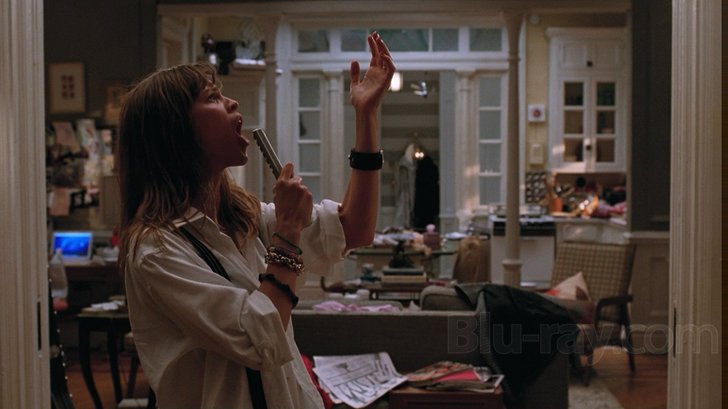
What’s simultaneously consoling and disconcerting about the whole thing is the slowly-dawning realization that this film could not be anything but the product of a human mind.  It is too inefficient and scattershot, too impulsive in its interests and too meandering in its plot construction, to have been assembled by committee.  There’s the snaps game, which in a more coherent film could have been a unique character- or narrative-illuminating detail, but here only registers as pointless quirk.  There’s Lisa Kudrow’s speech about the male vs. female gaze, whose sentiment—however legitimate—feels cheapened by its being so out-of-place in the rest of the movie (“After centuries of men looking at my tits instead of my eyes…, I now have the divine right to stare at a man’s backside with vulgar, cheap appreciation if I want to!”).  There’s Harry Connick, Jr.’s character whose apparent autism is dismayingly both a point of emphasis and also completely extraneous to the plot.  There’s Hillary Swank’s mourning widow wailing along to Judy Garland in a scene that should have been about feeling pathetic, but instead is just itself pathetic.


And so on and so on throughout the film.  Where it hopes to be idiosyncratic it ends up being inexplicable.  Where it aims for emotional complexity it lands instead at crass insensitivity.  There are too many examples of movies that have successfully blended humor, romance, and realism to let P.S. I Love You off with a pat on the back and a “good try.”  Think Richard Linklater’s Before series.  Think Eternal Sunshine of the Spotless Mind.  Think When Harry Met Sally.  Heck, think Ghost, which for all its preposterousness at least possessed a core of genuine human longing.

Even more unfortunate than the mere badness of the film is maybe what it suggests about its intended audience.  Do real flesh-and-blood women actually enjoy watching this nonsense?  Do they appreciate being made to seem like air-headed puppets blundering through life without the direction given by a man?  Do they really see themselves as empty little baubles who are most likely to achieve premium spiritual satisfaction through shoes?  Do men receive any satisfaction in believing that women are this stupid?  One especially excruciating scene on a boat executes the neat hat trick of making the characters, the creators of those characters, and the audience all look like idiots for taking part in the spectacle.


P.S. I Love You is the box wine of romantic comedies: cheaply made, apathetically consumed, and ideally meant to be paired with a lot of crying.  Richard LaGravenese, the director and co-screenwriter, has authored a lot of competent scripts and worked with a lot of more-than-competent directors, among them The Fisher King with Terry Gilliam and A Little Princess with Alphonso Cuarón.  I wouldn’t want my worst efforts held against me forever either, but some acknowledgement of wrongdoing here would have been nice.

Love,
Victoria


P.S….


Friday, June 13, 2014

2. Thank You for Smoking (2005)

Adam,

Leaving aside the fact that I’m going to use the above quote “I’m…a Marxist” against you during our head-to-head run for office, I dig what you have to say about Thank You for Smoking’s equal-opportunity brand of cynicism.  Like you, I appreciate that the movie tries to take on the whole corporate-political-media axis of lie-slinging and self-promotion.  While you talked about the movie’s cynicism from a systemic angle, I want to consider it from the perspective of its makers.

Christopher Buckley (L) and Jason Reitman (R)

It’s interesting to note that Thank You for Smoking is the product of two second-generation cultural power players whose satiric sensibilities seem to come directly out of their proximity to the worlds of money and influence: book author Christopher Buckley (son of conservative commentator William F.) and screen adaptor/director Jason Reitman (son of Ghostbusters director Ivan).  Given his conservative pedigree, it’s a little odd that someone like Buckley would write a novel that so thoroughly skewers both business and politics.  Then again, he would probably know better than most how powerful men talk and think, would know what it looks like when corporate interests infiltrate the political system.

So I think you’re right that many of the most astute parts of Thank You for Smoking are its portrayals of characters like the Captain, characterizations that are lifted straight out of the book.  “I was in Korea shooting Chinese in 1952,” the Captain, an aging tobacco baron, reflects in one scene.  “Today they’re our best customers.  Next time we won’t have to shoot so many of them, will we?”  It’s a perfect bit of dialogue for a character whose business savvy compels him to be fickle and short-sighted in spite of the tremendous weight of his experience.

Where the movie manages to improve on the book is where it journeys onto Jason Reitman’s home turf.  Unlike Buckley, Reitman didn’t grow up in the shadow of Washington; he grew up a film set brat.  It makes sense that some of the sharpest satire in the movie is focused in the Hollywood offices where Nick Naylor goes to solicit an executive (played by Rob Lowe) for help in maximizing cigarettes’ positive representation in media.  Here Reitman’s observations of a uniquely L.A. combination of maniacal pragmatism and preening affectation take on a charge and a specificity that the rest of the film somewhat lacks.  In terms of dialogue, characterization, pacing, and cultural allusion, these scenes are also a distinct step up from the book.

“Cigarettes in space?” Reitman has Naylor ask about one product placement idea.  “But wouldn’t they blow up in an all-oxygen environment?”  “Probably,” the Hollywood exec concedes, “but it’s an easy fix.  One line of dialogue: ‘Thank God we invented the…you know, whatever device.’”  Later, Naylor takes a call from the executive who, in my favorite comic reveal, is shown to be standing in his home, headset on, wearing a full-blown kimono.

But now to return to the subject of cynicism, particularly in view of the movie’s ending.  If you look at Reitman’s other projects (Juno, Up in the Air, Young Adult), I think you can see a recurring tension between cynicism and idealism about human nature.  There’s Juno, whose pregnancy variously brings out either the selfishness or the kindness of those around her.  There’s Up in the Air’s pragmatic-to-a-fault corporate downsizer, whose career hinges on the misfortune of others, but who is still capable of making himself vulnerable to and being betrayed by love.  And there’s the ex-beauty queen in Young Adult whose own emotional stuntedness comes into contact with the hard-won wisdom of a disabled former classmate.

Nick Naylor shares with all these protagonists a curious mix of acuity and guilelessness.  He’s talking a senate committee under the table one minute, falling for Katie Holmes’s transparently predatory news reporter another minute.  Ultimately, I disagree with you that Thank You for Smoking’s ending comes out of the same pure cynicism that the movie starts out with.  I tend to believe that the ending, a departure from the book, arises out of the impulse to end on a faint note of redemption.

In summary, the main lesson I take from this movie: I don’t have to prove I’m right; I just have to prove you’re wrong/a Marxist (paraphrased).

Love,
Victoria